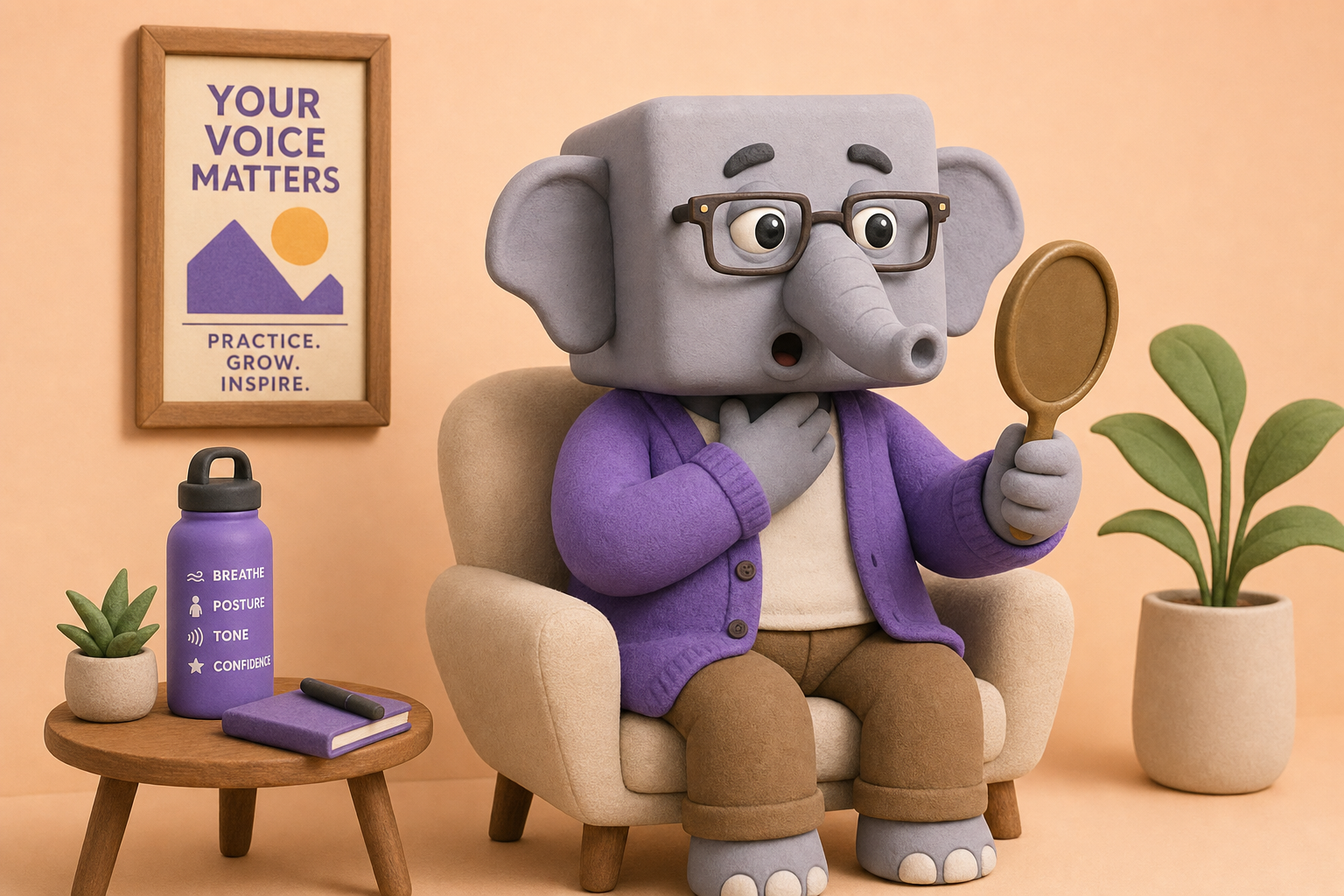
Speech Therapy Exercises for Home: How to Assign Them Effectively
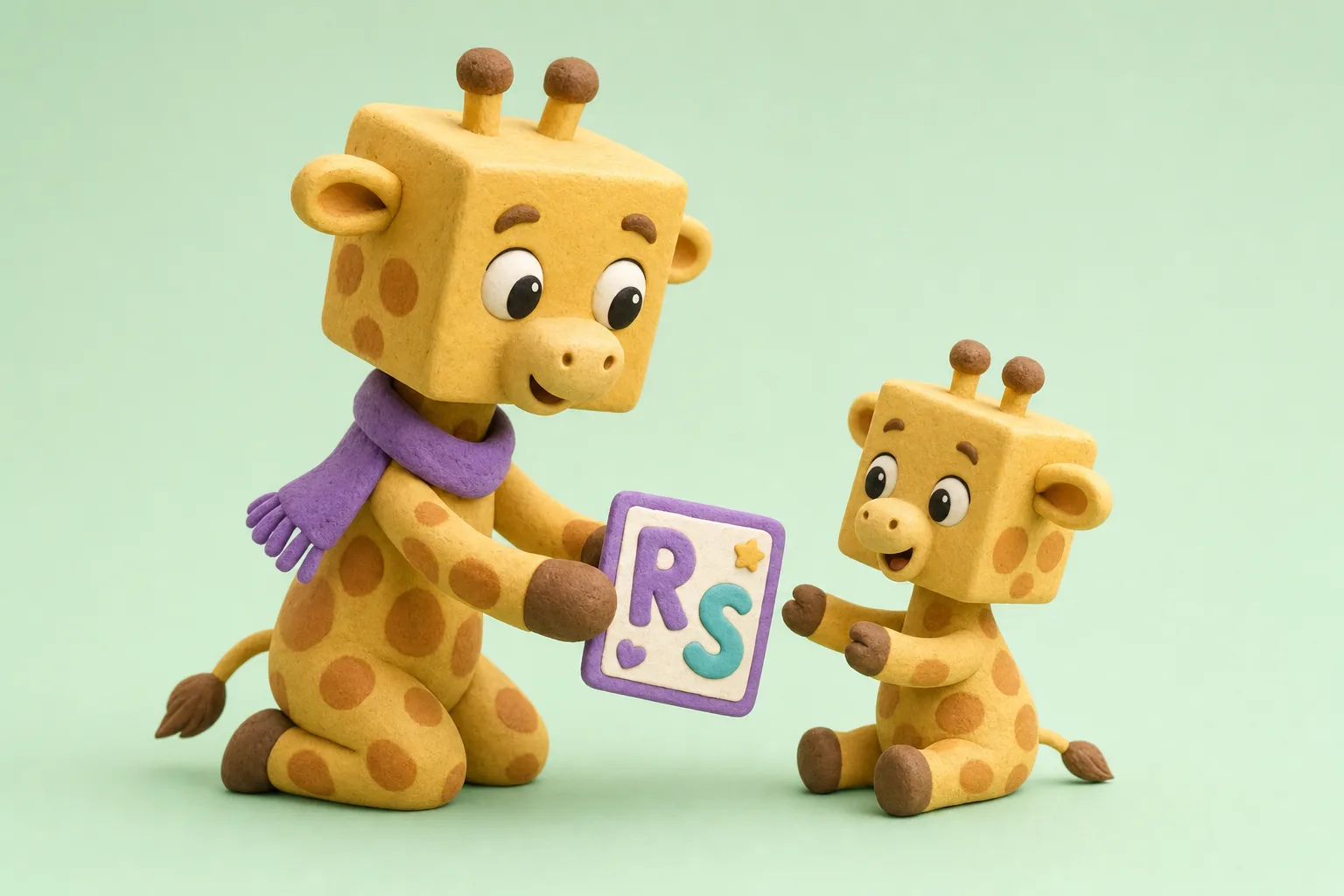
You know the feeling. You spend 20 minutes explaining speech therapy exercises for home practice, you hand out a worksheet, and the next week your client returns without having practiced even once. Sound familiar? You're not alone. Research by Williams et al. (2023) shows that 26% of parents don't complete home exercises and 25% miss appointments. That's not unwillingness. It's a sign that our way of assigning exercises could be better.
In this article, I share concrete approaches for assigning speech therapy exercises in a way that clients actually do them. From toddlers to adults, from articulation to oral motor skills. Looking for specific exercises? Check out our article with 10 effective speech therapy exercises, or for specific groups: speech therapy exercises for adults and speech therapy exercises for 3 year olds. Feel free to combine this with our overview of software for your speech therapy practice if you want to weigh digital tools against paper and EMR systems.
Why Home Exercises Make the Difference
The 30 or 45 minutes you work with a client each week aren't enough for lasting change. Motor learning requires repetition, lots of repetition (Maas et al., 2008). Cummings et al. (2020) showed that children who practice four times a week achieve the same progress in half the time compared to twice a week. We've been telling parents this for years. Yet it often doesn't happen.
The problem rarely lies with the motivation of parents or clients. It lies in how we assign the exercises. An A4 sheet with "practice the /r/ in medial position" doesn't help anyone at home. The threshold must be lower. The instruction must be clearer. And preferably there's an element of fun involved.
How Can You Practice Speech Therapy at Home?
The core question parents and clients ask. Your answer determines whether they'll actually do it. Below, what works for each target group.
Speech Therapy Exercises for 3 Year Old Children (Toddlers 2 to 3 Years)
With toddlers, everything revolves around play. They practice without knowing they're practicing. Give parents play ideas instead of worksheets:
- Blowing: soap bubbles, blowing out candles, blowing cotton balls across the table. Good for oral motor skills and airflow.
- Imitating sounds: animals, vehicles, sirens. Link it to a picture book the family already has.
- Singing and rhymes: "The Wheels on the Bus", "If You're Happy and You Know It". Repetition is built into the song.
- Daily routines: name everything during dressing, eating, grocery shopping. Language stimulation without extra time investment.
Give parents a maximum of two activities per week. They won't remember more. Be specific: "Do this during teeth brushing" or "Do this in the car to daycare." Link it to a fixed moment.
Preschoolers (4 to 5 Years)
Preschoolers can practice somewhat more consciously, but play remains leading. Here, short visual tasks work:
- Picture cards with target words: let the child "win" the cards by saying the word correctly.
- Dice + word list: roll and say the word at that number. Makes it a game.
- Sticker system: practiced five times? Add a sticker. Sheet full? Small reward moment.
- Short videos or audio: an example of what the word sounds like. Parents then know exactly what to model.
Important: give parents a model. Show during the session how they can do the exercise at home. Demonstrating once works better than half a page of explanation.
Speech Therapy Exercises for Adults
Adults have different motivation and different barriers. They understand why practicing is important, but the day is full. Work, family, obligations. Practice time gets squeezed out.
What works for adults:
- Short sessions: preferably three times five minutes rather than once for 15 minutes. Fits better into a busy day.
- Link to routine: practice during driving (word lists aloud), in the shower (oral motor skills), or while making coffee.
- Self monitoring: have clients record their own speech and listen back. This increases awareness and gives immediate feedback.
- Clear instruction videos: a 30-second video that shows exactly what you mean. Easier to review than written instructions.
- Concrete goals: "Practice these six words three times a day" is better than "Pay attention to your /s/ in conversations."
For adults with neurological conditions (aphasia, dysarthria) especially: keep it short, keep it simple, offer structure. A fixed schedule with fixed exercises at fixed times works best.
Exercises by Type
Articulation: R, S, G, and K Sounds
The /r/ is the most common reason for referral. For home exercises: build up in difficulty level.
- Isolated: produce the sound alone (humming, growling, tapping)
- In syllables: ra re ri ro ru, then ar er ir
- In words: start with words where the sound is in an easy position
- In sentences: short sentences with the target word
- In conversation: spontaneous use in daily situations
McFaul et al. (2022) recommend a minimum of 70 target productions per session for children with severe speech disorders. Give a maximum of eight to 10 target words per level. Indicate: "If seven out of 10 succeed, you can move to the next level." That gives the client autonomy and clarity.
For the /s/, a mirror works well as a tool at home. For /g/ and /k/, tactile cues help (feeling hand on throat) that parents can easily imitate.
Oral Motor Skills
Oral motor exercises are easy to do at home but quickly become boring. Make it a game:
- Making funny faces in the mirror
- Licking peanut butter or chocolate spread from lips (circular movements with tongue)
- Drinking through a straw (preferably a thin straw for more resistance)
- Chewing exercises with gum or chewy candies
Give parents five exercises on a card with photos. No text. Photos of the child themselves doing the exercise work best.
Language Stimulation
This is more about an attitude than exercises. A meta analysis by Roberts & Kaiser (2011) confirms that parents trained in language stimulation have a significantly positive effect on their child's language development. Teach parents the techniques:
- Expanding: child says "car", parent says "yes, a red car!"
- Modeling: correctly modeling the word without correcting
- Waiting: give the child three to five seconds to respond
- Naming: verbalize what you're doing, seeing, and feeling
Give one technique per week. Have parents link that technique to one fixed moment (for example, dinner). More is overwhelming.
What is the 25% Rule in Speech Therapy?
The 25% rule is a rule of thumb for language stimulation: speak at a level about 25% above the child's language level. Does a child use two word sentences? Then you model two to three word sentences. Does the child speak in four word sentences? Then you use five word sentences.
Why does this work? Language that's too far above the child's level goes over the child's head. Language that's exactly at level offers no new learning moment. That 25% above is the sweet spot: understandable enough to follow, just difficult enough to learn from.
Explain this to parents with a concrete example: "Your child says 'ball gone'. You say: 'yes, the ball is gone!' That's enough." Parents tend to use overly complex sentences. The 25% rule gives them guidance.
Where Can I Download Speech Therapy Exercises?
This question comes often from parents and from colleagues looking for materials. There are various sources:
- Speech therapy websites: worksheets per sound and theme
- Pinterest: visual cards and game ideas (varying quality)
- Material platforms like specialized speech therapy resource sites: paid packages with ready made exercise sets
- Own materials: many colleagues make their own worksheets and share them via social media
The disadvantage of downloadable worksheets: they're static. You can't adapt them to your client's specific level without cutting and pasting again yourself. Moreover, paper worksheets get lost, forgotten in the bag, or end up in the trash. On the blog you'll also find background on approaches and tooling for practice.
Digital Tools vs. Paper Worksheets
Both have their place. Paper works well for young children who aren't allowed screen time yet, for families who consciously want less screen time (and there are more and more of those), and for clients without smartphones. Beyond that, digital wins on almost every point:
| Paper | Digital | |
|---|---|---|
| Always at hand | No (gets lost) | Yes (on phone) |
| Adaptable to level | Limited | Yes |
| Feedback for therapist | None | Insight into practice frequency |
| Motivating for children | Moderate | High (gamification) |
| Easy to update | No (reprint) | Yes (adjust directly) |
A realistic review by Leafe et al. (2025) concludes that digital tools can help parents achieve the recommended practice intensity. The big advantage: you see whether practice is happening. You no longer have to ask "Did you practice?" and get a socially desirable answer. You see it in the data.
LogiLand offers exactly this possibility. You create exercises that fit your client's level, the client practices at home via the app, and you see the progress before the next session — also see how the practice environment works. No lost worksheets, no unclear instructions. For parents, there's a separate explanation on the site about LogiLand for home. Questions about pilots or implementation? Get in touch.
Improving Motivation and Therapy Adherence
Therapy adherence depends on three things: does the client understand what's expected, can the client fit it into daily life, and does the client experience results? According to Williams et al. (2023), the importance parents attach to the exercise and their confidence they can do it (self efficacy) together predict 56% of the variance in therapy adherence.
Practical tips:
- Make it concrete: "Practice three times a day, five minutes" is clearer than "Practice regularly."
- Start small: better two minutes a day than ten minutes that never happen.
- Give positive feedback: discuss at the start of each session what did work.
- Involve the environment: partner, parent, teacher. The more people participate, the more normal practicing feels.
- Make progress visible: let clients hear their own improvement (compare recordings) or see it (graph of practice frequency).
- Adjust practice level: too difficult leads to frustration and giving up. Use the rule: 80% must succeed. Less than 80% succeeds? Take a step back.
The Conversation About Therapy Adherence
Avoid accusatory language. "Why didn't you practice?" backfires. Instead ask: "What made it difficult to practice this week?" That creates space for honesty and you can look for a solution together.
Sometimes the conclusion is that the practice program is too heavy. Better to reduce frequency and practice consistently than an ambitious schedule that fails after three days.
Summary: The Five Principles
- Short and often is better than long and rarely
- Link to an existing routine (teeth brushing, driving, eating)
- Show it, don't just give text
- Adapt the level: 80% must succeed
- Make practice visible: for the client and for you as therapist
Speech therapy exercises for home only work if they're actually done. That starts with how you assign them. Think less in worksheets, more in habits. Less in perfect execution, more in consistency. And dare to ask the question: does your way of assigning make it easy enough to do? On the homepage there's an FAQ about LogiLand for common questions from speech therapists and parents.
References
- Cummings, A., Giesbrecht, K., & Hallgrimson, J. (2020). Intervention dose frequency: Phonological generalization is similar regardless of schedule. Child Language Teaching and Therapy, 37(2), 193–207. doi.org/10.1177/0265659020960766
- Leafe, N., Pagnamenta, E., Taggart, L., et al. (2025). What works, how and in which contexts when using digital health to support parents/carers to implement intensive speech and language therapy at home for children with speech sound disorder? A realist review. PLoS ONE, 20(1), e0321647. doi.org/10.1371/journal.pone.0321647
- Maas, E., Robin, D. A., Austermann Hula, S. N., et al. (2008). Principles of motor learning in treatment of motor speech disorders. American Journal of Speech Language Pathology, 17(3), 277–298. doi.org/10.1044/1058-0360(2008/025)
- McFaul, H., Mulgrew, L., Smyth, J., & Titterington, J. (2022). Applying evidence to practice by increasing intensity of intervention for children with severe speech sound disorder. BMJ Open Quality, 11(2), e001761. doi.org/10.1136/bmjoq-2021-001761
- Roberts, M. Y., & Kaiser, A. P. (2011). The effectiveness of parent implemented language interventions: A meta analysis. American Journal of Speech Language Pathology, 20(3), 180–199. doi.org/10.1044/1058-0360(2011/10-0055)
- Roberts, M. Y., Curtis, P. R., Sone, B. J., & Hampton, L. H. (2019). Association of parent training with child language development: A systematic review and meta analysis. JAMA Pediatrics, 173(7), 671–680. doi.org/10.1001/jamapediatrics.2019.1197
- Williams, P., Slonims, V., & Weinman, J. (2023). 'Turning up and tuning in'. Factors associated with parental non attendance and non adherence in intervention for young children with speech, language communication needs. International Journal of Language & Communication Disorders, 58(6), 2144–2161. doi.org/10.1111/1460-6984.12961